World Cup Simulator: Expected Goals, 3rd-Place Rankings & New Methodology
27 May 2026
New: Expected Goals, Goal Difference & 3rd-Place Rankings in Our World Cup Simulator
The World Cup simulator recently got a significant upgrade. We added a new segment focused on expected goals scored, expected goals conceded, and expected goal difference for every team (not only for WC but every competition), created a big new feature based on simulating 3rd-place rankings which have a big impact on knockout bracket formation and we've sharpened the underlying methodology by blending betting market odds into our match model.
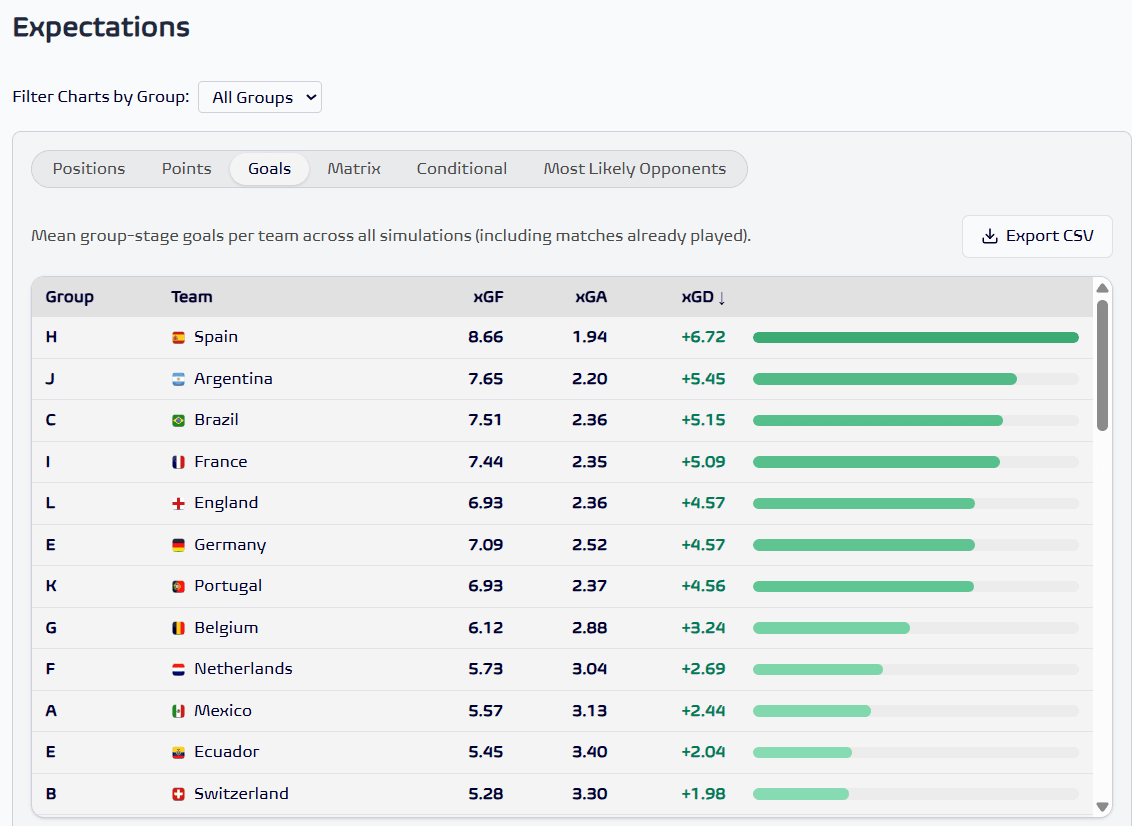
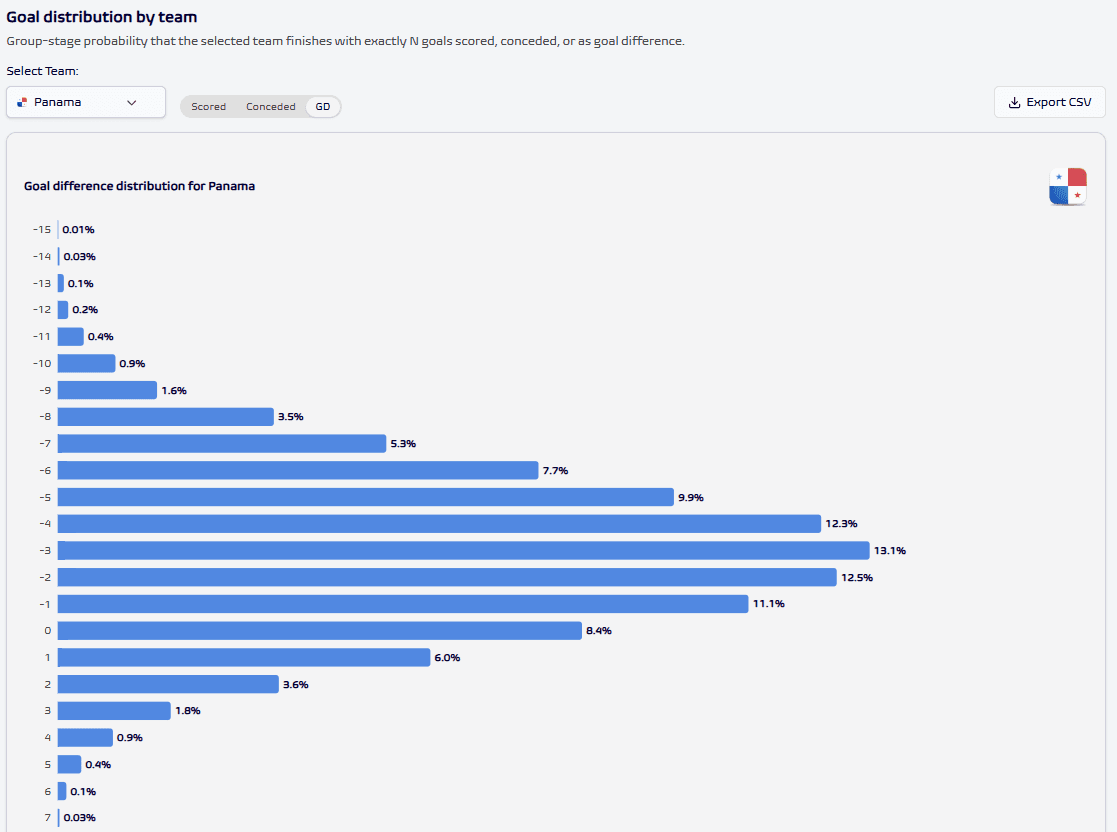
If you're using our World Cup predictor to follow your favorite nation's path, these numbers matter more than ever, especially if your team is heading for a third-place finish.
Why expected goal difference matters at the World Cup
The 2026 World Cup expands to 48 teams across 12 groups of four. The top two from each group advance automatically. But there are also eight spots reserved for the best third-placed teams, and that's where goal difference becomes everything.
FIFA's tiebreaker order for ranking third-placed teams across groups is:
- Points
- Goal difference
- Goals scored
- Fair play points
- FIFA ranking
In practice, the first three carry almost all the weight. A single goal of difference can be the line between a knockout spot and an early flight home. Our simulator now surfaces all three of these directly, for every team, across tens of thousands of simulations.
Simulating every possible 3rd-place scenario
This is the part we're most excited about. Our World Cup simulator doesn't just estimate "Team X has a 38% chance of advancing." It runs the full tournament forward, every group, every match, every possible scoreline, and applies FIFA's exact ranking rules to pick the eight best third-placed teams in each individual simulation.
That means you can see:
- The probability that, given a 3rd-place finish, they qualify as one of the best eight thirds
- The expected points, expected goal difference, and expected goals scored needed to clear the cutoff
- How the cutoff shifts based on which groups produce strong or weak third-placed teams
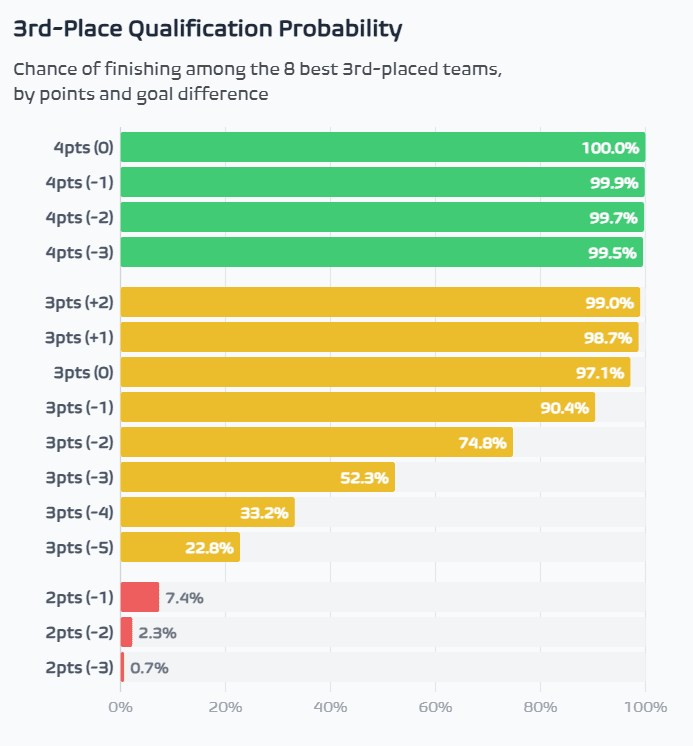
- Who are the most likely opponents of group winners that will be paired with a 3rd placed team in R32
- Who are the most likely opponents of 3rd-placed teams that will be paired with a group winner
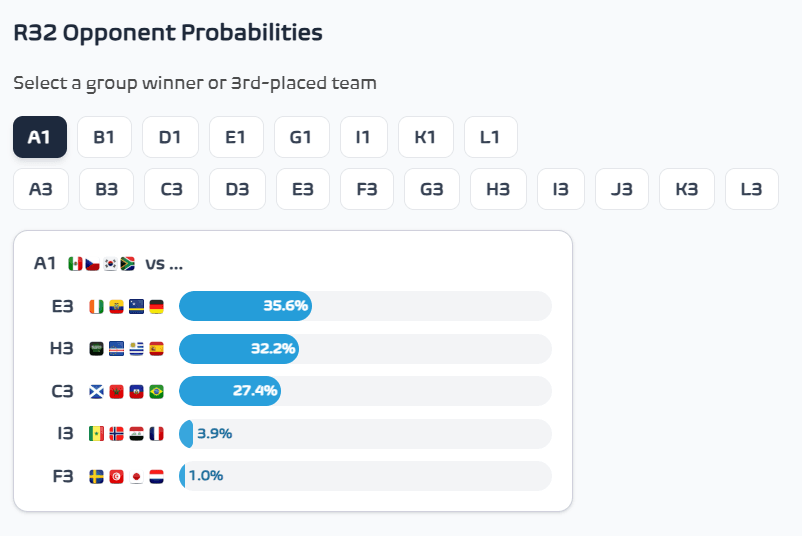
- Which of the 495 possible combinations of groups sending a 3rd-placed team is most likely to happen
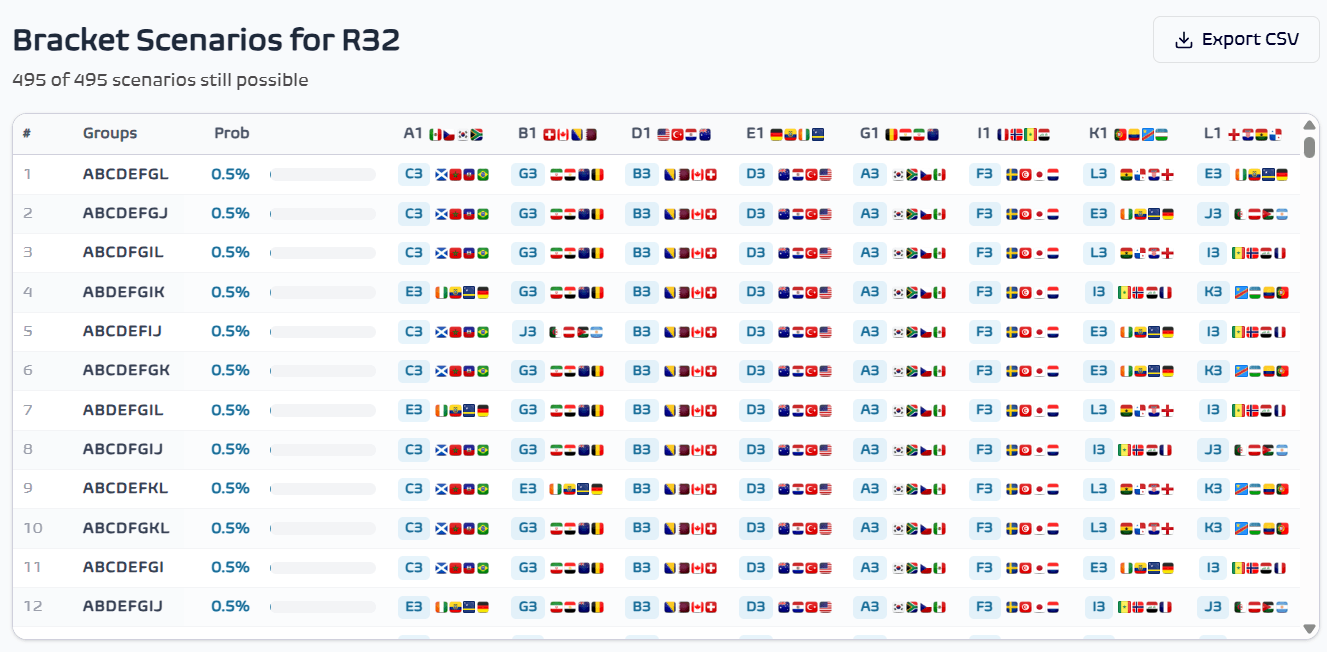
And above all, how do these probabilities change when you enter custom results and custom hypothetical scenarios.
For nations on the bubble, this is the difference between a vague gut feeling and an actual number.
Improved methodology: betting odds in the match model
We've also upgraded how individual match outcomes are generated. Our match model now incorporates market betting odds alongside our underlying Elo-type ratings, blending the two into a single calibrated forecast.
Why this matters:
- Markets price in current form, injuries, suspensions, and information our rating system can't see directly
- Rating systems anchor the long-run signal so the model doesn't overreact to short-term noise
- The combination produces match probabilities that are both sharper and better calibrated than either source alone
The result: more realistic scorelines feeding into the simulation, which means more realistic expected goals, which means more accurate probabilities.
Try it now
Head to the World Cup simulator to explore your team's full path, group stage, knockouts, and every third-place scenario in between.
If you're not yet our member and would like to become one, check our Pricing page and join.
🔔 Get live alerts on your phone
Follow a team and we send you a push notification when a goal changes its chances, with the new probability in the message, and another one at the final whistle. How live match alerts work and how to switch them on.